Cat Lovers Community Team
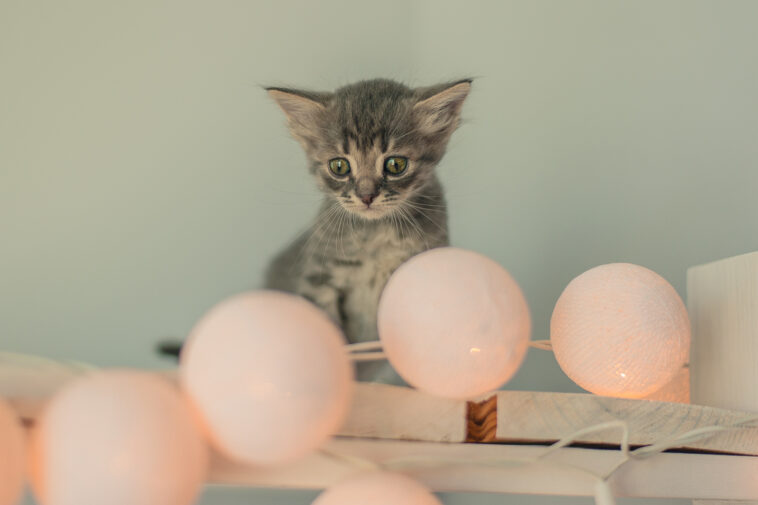
Cats are animals that are very curious by nature. They like to explore their surroundings and can be attracted to shiny objects. LED lights emit a bright light that can appear very attractive to cats.
However, there is some debate over whether or not LED lights are harmful to cats. Some people believe that the bright light from LED lights can damage a cat’s eyesight, and there is also concern that the heat emitted from LED lights can harm a cat’s skin.

LED lights are becoming increasingly popular as they are more energy efficient than traditional light bulbs. However, it is important to consider your cat’s possible risks before you switch to LED lights.
Are led lights harmful to cats?
Cats are susceptible to a condition known as photokeratitis, which can be caused by exposure to ultraviolet (UV) light. While LED lights do not emit UV radiation, some types of LED lights can produce high-intensity visible light that may harm your cat’s eyes. So, they might not be the best option if you’re looking for lighting that won’t bother your feline friend.
What is photokeratitis?

Photokeratitis is a condition that results from damage to the cornea, the clear outer layer of the eye. It can be caused by exposure to UV light, such as from the sun, or by exposure to other high-intensity visible light sources, such as lasers.
Symptoms of photokeratitis in cats.
Several symptoms may be associated with photokeratitis in cats, including:
- squinting or blinking more than usual
- pawing at the eyes
- redness of the eyes
- tearing
- swelling of the eyes
- sensitivity to light
- the cloudy appearance of the cornea
If your cat is showing any of these symptoms, it’s important to take them to the vet as soon as possible.
How to protect your cat’s eyes from LED lights.
If you’re using LED lights in your home, there are a few things you can do to help protect your cat’s eyes:
- Use dimmer switches for LED lights, or put them on a timer.
When LED lights are dimmed, they produce less intense light that is less likely to cause problems for your cat.
- Use LED lights with a lower colour temperature.
LED lights with a lower colour temperature (measured in Kelvin) emit more reddish light, less intense than bluer light.
- Keep LED lights away from your cat’s sleeping area.
If possible, try to keep LED lights away from areas where your cat sleeps or spends a lot of time, which will help reduce their exposure to intense light.
- Talk to your vet about eye Drops for cats.
Some eye drops can help protect your cat’s eyes from the harmful effects of LED lights. Your vet can help you choose the right product for your cat.
Conclusion.
While LED lights don’t emit UV radiation, some types can produce high-intensity visible light that may harm your cat’s eyes. So, if you’re using LED lights in your home, there are a few things you can do to help protect your cat’s eyes, such as using dimmer switches or putting them on a timer. It would help if you also talked to your vet about eye drops that can help protect your cat’s eyes from the harmful effects of LED lights.